
Our firefighters are on the tools, the sirens are screaming, and the adrenaline is red-lining. Whether it’s a structural fire or a messy medical call, the pressure is constant. It’s a culture built on looking out for mates—on being the one who shows up when everyone else is running away.
But when the gear is stowed and the shift ends, how are they really managing the weight of what they see? Is the "hard-partying" weekend just a release, or is it something more insidious?
The Pivot: Why are we talking about this now?
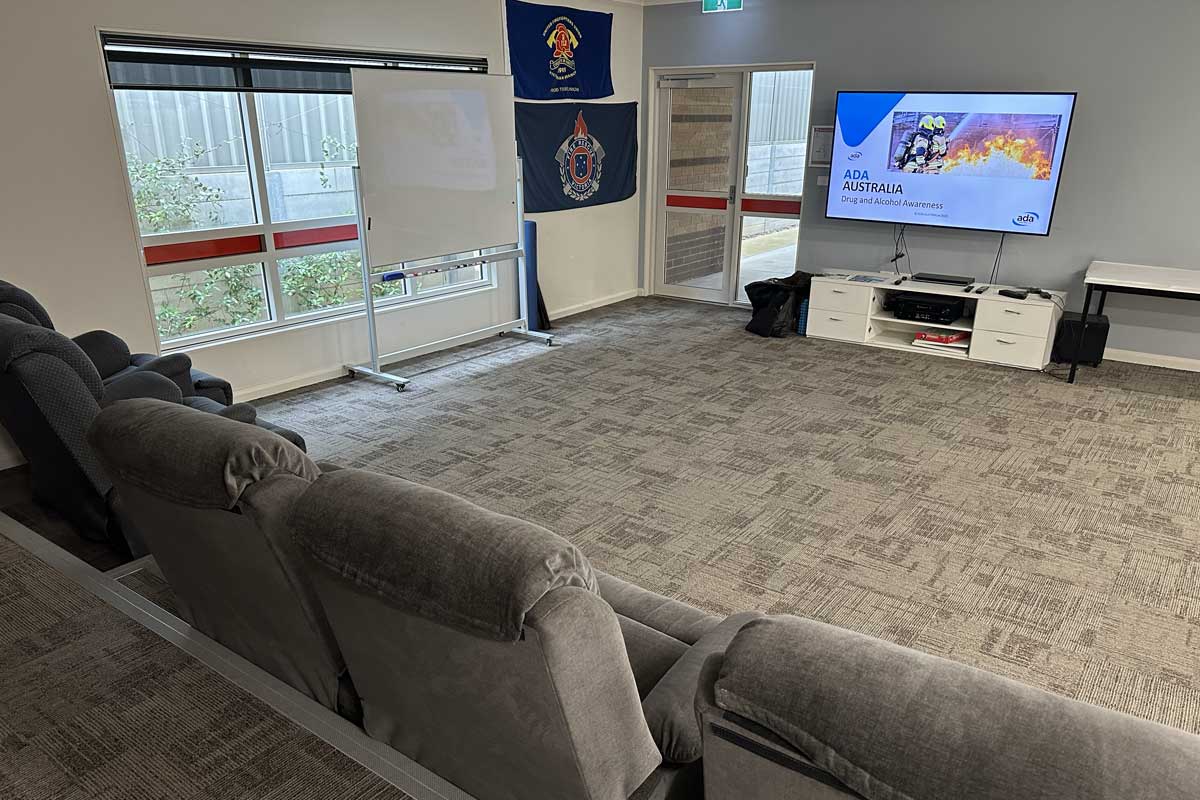
Between May and December 2025, ADA Australia hit the road to meet the crews of Fire Rescue Victoria (FRV). We didn’t just stay in the city; we covered the map from the rugged coast of Portland to the border at Wodonga, and from the peninsula in Rosebud up to the heat of Mildura.
We delivered 125 alcohol and other drug awareness programs to hundreds of firefighters. This wasn’t a "tick-the-box" exercise—this was a strategic initiative designed to protect the very people who protect us.
More Than Just a Training Session
The reality of the fire service is uniquely demanding. The toll of trauma—combined with a culture that values toughness—can often mask a brewing crisis.
Throughout the rollout, the engagement from FRV attendees was fundamentally different from your standard corporate seminar. We didn't see people checking their watches. Instead, we saw highly interactive sessions that sparked thoughtful questions and meaningful discussions that frequently pushed past the scheduled finish time.
The Data: What FRV attendees had to say
The feedback wasn't just "good"—it was unanimous. 100% of attendees stated they would recommend this training to others. That is a rare statistic in any industry.
One FRV Commander stated: "This was one of the most worthwhile training sessions FRV has delivered."
Why? Because we didn't just talk about impairment or blood-alcohol levels; we talked about the person inside the uniform, or the person requiring assistance in an emergency call-out.
Breaking the Stigma
When we asked attendees what stood out the most, the perspective shifted from the clinical to the human. Here is what we heard on the ground:
- Empathy for the "Why": "My attitude towards the type of people we see at overdose events has changed... It’s helped me see the person they were or are inside and consider their families.”
- The Power of Conversation: "How to approach those who may be suffering and how to best talk to them."
- Protecting the Home Front: "Looking out for signs and symptoms of family and friends possibly going through substance abuse."
- Self-Reflection: Many noted the "ability to reflect on my own behaviours around alcohol."
It’s was about more than the pay packet or career longevity. It’s about ensuring that when our firegihters go home, they’re actually there.
We weren't there to preach, and we weren't there to judge. We were there to provide the tools to ensure our firefighters stay safe and their family stays whole.
If you’d like to learn more about ADA Australia, or any of the training programs we offer, please visit us at: www.adaaus.com.au or call us on 1300 378 429 or email: enquiry@adaaus.com.au
If this information has raised any concerns for you, please do speak to your GP, or call a helpline: DirectLine 1800 888 236, LIFELINE 13 11 14 or BeyondBlue 1300 22 4636.